Speech-to-Text
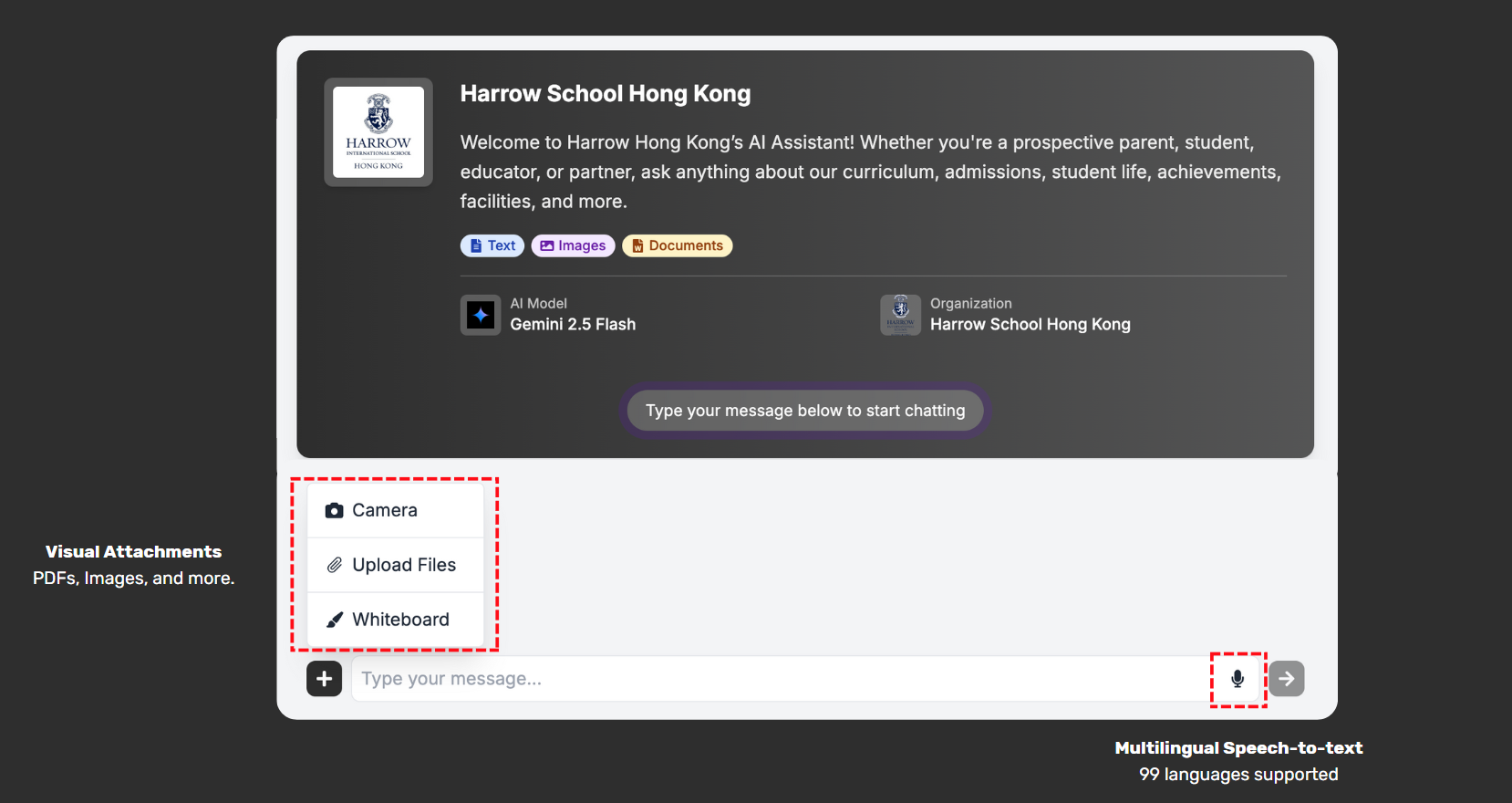
Knobase agents support voice-to-text input, allowing users to speak naturally instead of typing. This feature enhances accessibility, supports younger learners, and enables faster, more intuitive communication—especially in dynamic classroom environments.
Written By Christopher Lee
Last updated About 1 year ago
Why Voice-to-Text Matters
✅ Supports students with literacy challenges, motor difficulties, or language barriers.
✅ Encourages spontaneous inquiry and real-time classroom interaction.
✅ Makes agents more inclusive and user-friendly across age groups.
✅ Reduces typing fatigue and speeds up engagement.
How It Works
Users can speak directly into the chat interface using supported devices.
The agent transcribes the speech into text and processes it like any other query.
Works across 99+ languages, including Cantonese, Mandarin, English, and more.
💡 Example Interaction
Student (spoken): “Can you help me with question 3 on my worksheet?”
Agent: Analyzes the uploaded image and responds:
“Sure! Question 3 asks about the water cycle. Try describing each stage using the diagram you provided.”
Use Cases for Voice-to-Text
🧒 Primary Students: Speak questions aloud instead of typing.
🧑🏫 Teachers: Dictate lesson ideas or feedback while multitasking.
🧑🎓 Multilingual Classrooms: Use native language input for faster understanding.
Was this helpful?
Still need help? Ask the team